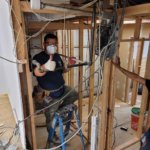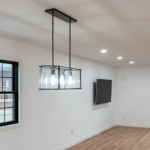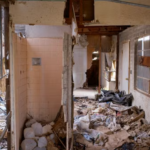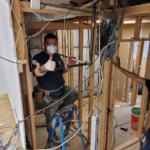
A full kitchen gut renovation involves more than removing old cabinets and installing new finishes. In New York City, the process starts with understanding the building’s requirements, securing necessary permits, and addressing potential lead paint hazards before demolition.
If you are planning a major kitchen renovation, knowing what happens at each stage helps you evaluate contractors and prepare for the work ahead.
This guide explains what to expect during a full kitchen gut renovation in NYC, from initial planning and demolition to reconstruction and final inspections.
Quick Answer: A full kitchen gut renovation follows a sequence of checkpoints, and knowing them in advance protects your budget and your schedule.
Expect your contractor to confirm permits first, use lead-safe work practices where paint is old, demolish to the studs, rebuild the framing, drywall, and finishes, and then pass Department of Buildings (DOB) inspections.
The exact order depends on your building and scope, so ask for a written sequence before work starts.
A full kitchen gut renovation removes everything inside the kitchen: cabinets, counters, flooring, wall finishes, and often the layout itself. The crew then rebuilds from the structure outward.
Elkanah Remodeling Co. handles this scope through interior demolition, framing and drywall, plastering, flooring, painting, and carpentry. The company also coordinates with architects and structural engineers when your plan calls for them.
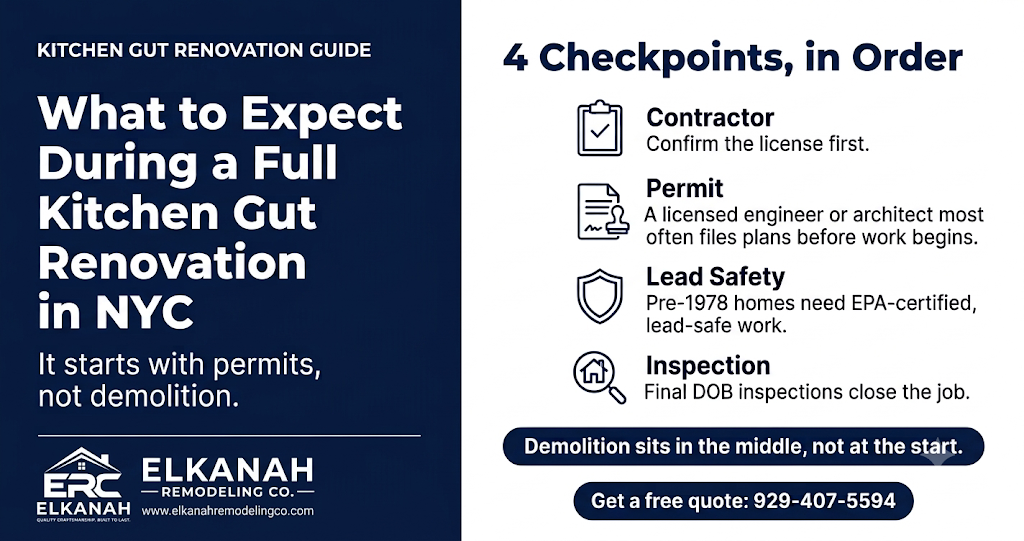
Four important checkpoints help shape a full kitchen gut renovation in NYC. Each addresses a different part of the project and helps prevent avoidable problems.
Start by checking the contractor’s license, insurance, experience, and previous projects before agreeing to a schedule. Ask who will manage the work, coordinate subcontractors, and communicate updates throughout the renovation.
The NYC Department of Buildings (DOB) states that most construction projects require a permit. A New York State licensed Professional Engineer (PE) or Registered Architect (RA) generally files the required plans and obtains the relevant approvals and permits before work begins.
An Alteration Type 2 (ALT2) filing generally covers multiple types of work that do not change a building’s use, egress, or occupancy. Most kitchen and bathroom renovations involving several types of work require this filing.
The DOB issues a Letter of Completion for applicable ALT2 projects after the required final inspections. The correct filing depends on the renovation scope, so ask your architect or engineer which requirements apply to your project.
Lead-safe preparation is particularly important in homes built before 1978.
Under the U.S. Environmental Protection Agency’s (EPA) Renovation, Repair and Painting (RRP) Rule, firms performing paid renovation work that disturbs painted surfaces in covered pre-1978 housing generally need EPA certification and must follow the required work practices.
The minor repair exemption does not cover demolition of painted surfaces, even when the amount of paint disturbed is small. Since a full kitchen gut renovation can involve removing cabinets, walls, and other painted components, ask your contractor how the project will meet applicable lead-safe requirements.
Required inspections help confirm that permitted work meets applicable building requirements. Your contractor should explain which inspections apply, who schedules them, and what needs to be completed before the project can move forward.
Client Thomas Kent described this part of his renovation experience in a Google review: “Carlos also assisted in securing the applicable building permits and scheduling the corresponding inspections.”
Quick Answer: Skipping a checkpoint costs far more than following it, and a clear sequence gives you control over safety, budget, and timing.
Unpermitted work carries real exposure. The NYC Department of Buildings warns owners not to begin work without a DOB permit, because owners and the people performing the work may face violations with penalties, court appearances, and civil or criminal penalties.
Those outcomes make the permit filing a budget decision as much as a legal one.
When you know the sequence, you can compare contractors on process instead of price alone. You can ask who files the permit, who handles lead-safe work, and who reports to you each week.
Credentials answer part of that question. Elkanah Remodeling Co. holds EPA Lead Paint Certification from the U.S. Environmental Protection Agency (NAT-F215558-2 and LBP-F215558-2).
Quick Answer: Demolition does not come first, and no two kitchen jobs need identical paperwork, trades, or schedules.
Demolition feels like the starting gun, but it sits in the middle of the sequence. Permit filing and lead-safe preparation come before it, and final inspections come after it.
Starting early does not save time. A crew that begins before the permit exists puts your project at risk before the first wall comes down.
Scope decides the paperwork and the people.
According to the NYC Department of Buildings, some minor alterations do not require a work permit. However, projects involving multiple types of construction work may require an ALT2 filing, while electrical work has separate permit and licensing requirements.
Ask your contractor who holds each license your kitchen needs.
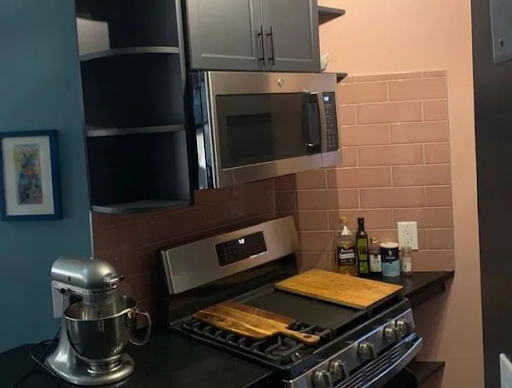
Schedules vary too. One Elkanah Remodeling Co. full-gut kitchen renovation in an NYC apartment finished within a 3-week timeframe and on budget. Your timeline depends on your scope, your building, and your approvals, so treat that project as one example, not a promise.
Quick Answer: Elkanah Remodeling Co. combines a hands-on owner, DOB permit handling, and steady reporting so you always know where your kitchen stands.
Carlos Blanco, the owner, stays personally involved in each project. Elkanah Remodeling Co. handles NYC DOB permits and inspections and works from DOB sets and architectural plans.
The company is licensed, bonded, and insured. It serves the Bronx, Brooklyn, Manhattan, Queens, Staten Island, and Westchester County.
Communication separates a calm renovation from a stressful one.
Client Richard Anderson, reviewing his kitchen full-gut renovation on Google, wrote, “We received daily status pictures, frequent videos, weekly project meetings, and overall excellent communication.”
That rhythm turns each checkpoint into something you can see, not something you must chase.
Q1. What should I expect during a full kitchen gut renovation?
Expect a sequence of permit filing, lead-safe preparation in older homes, demolition to the studs, a full rebuild, and DOB inspections. Your contractor should send regular progress reports at each stage. Ask for that sequence in writing before work begins, so you can hold every phase to a clear schedule.
Q2. Do I need a permit for a full kitchen gut renovation in NYC?
In most cases, yes. The DOB says a Professional Engineer or Registered Architect most often files plans and pulls permits before work begins, and only some minor work needs no permit. A full kitchen gut renovation goes well beyond minor work.
Elkanah Remodeling Co. handles NYC DOB permits and inspections for its clients.
Q3. Does my pre-1978 home need lead-safe work?
Generally, yes. A gut renovation involves demolition of painted surfaces, and the federal rule excludes demolition from its minor-repair exemption. Elkanah Remodeling Co. holds EPA Lead Paint Certification.
Q4. Which areas does Elkanah Remodeling Co. serve?
Elkanah Remodeling Co. serves the Bronx, Brooklyn, Manhattan, Queens, Staten Island, and Westchester County. The office is at 1343 Bristow Street, Bronx, NY 10459.
Q5. How do I check a contractor’s license before signing?
Ask for the license number in writing before you sign. Elkanah Remodeling Co. holds NYC Home Improvement Contractor License #2078698-DCA, which applies to NYC only.
A full kitchen gut renovation in NYC involves more than removing old cabinets and installing new finishes.
The process includes contractor selection, permit approvals, lead-safe preparations where applicable, demolition, rebuilding, and final inspections. Understanding these stages helps you ask better questions and make informed decisions before construction begins.
If you are planning a full kitchen gut renovation, Elkanah Remodeling Co. can help coordinate the work, permits, and inspections while keeping you informed throughout the project.